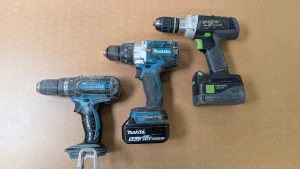
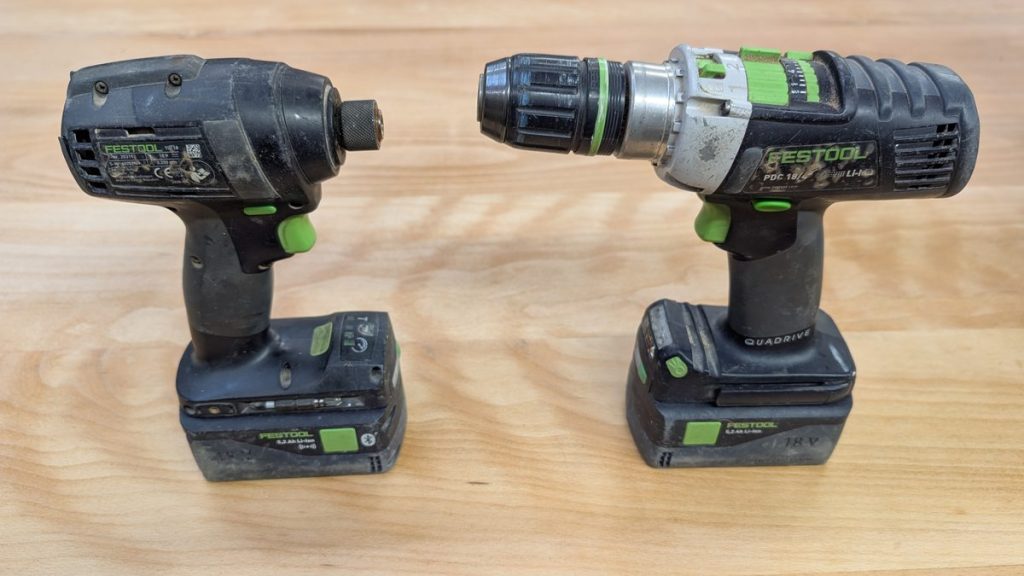
They look similar, they cost about the same, and most people buy them as a twin kit without ever being told what the difference is. So the impact driver sits in the case while the drill does everything, or it gets used for jobs it is wrong for. Here is what each one is actually for, and which to buy first if you are only buying one.
The short version
- A combi drill drills holes, drives screws, and hammers into masonry. It has a chuck that grips anything round, and a clutch so you can stop it over-driving.
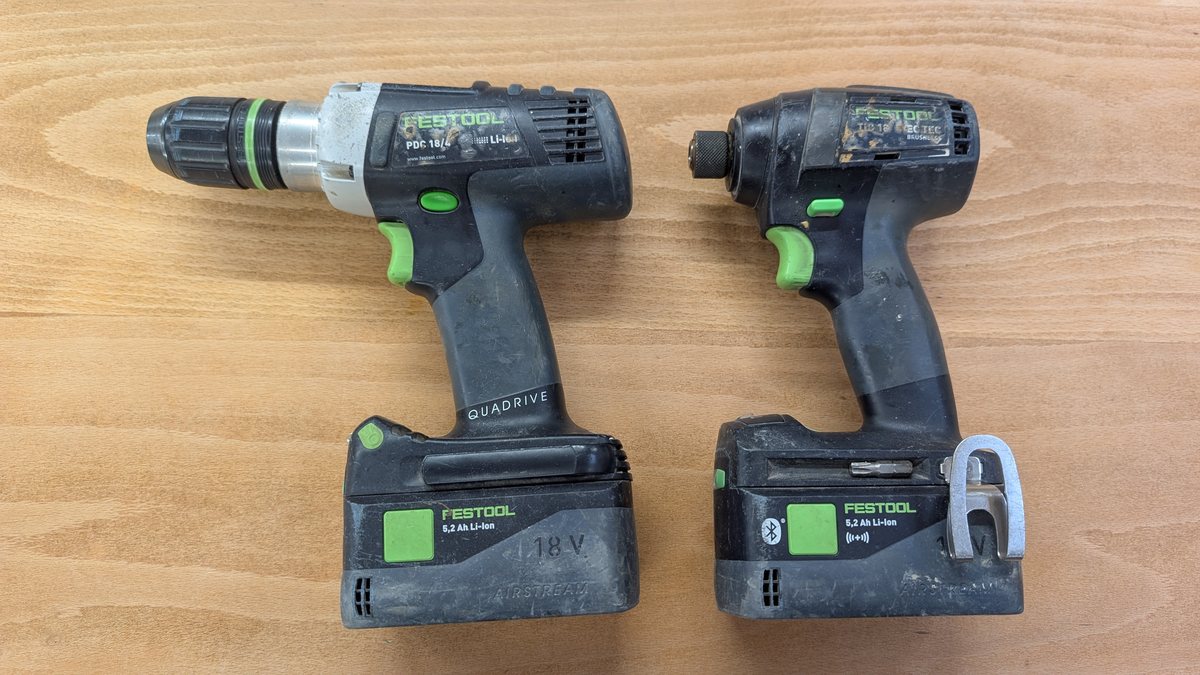
- An impact driver only drives. It has a hex socket, no clutch, and a hammering action that turns the screw in short bursts instead of one long shove.
One is a general-purpose tool. The other does a single job much better than the general-purpose tool can.
Why the impact driver drives so much better
A drill applies steady twist. Past a certain point the screw stops turning, and the tool twists in your wrist instead. An impact driver gets round that by striking as it turns, thousands of times a minute. Each strike moves the screw a little further, and because the force arrives in bursts, very little of it comes back up your arm.
That is why a long screw into dry timber, which will stall a drill and wrench your wrist, goes in on an impact driver without much effort. It is also why an impact driver is noisier: the noise is the mechanism working.
What the numbers say, and what they don’t
Across the cordless tools on ToolPicker, the gap looks enormous. The middle of the impact driver range sits around 180Nm of maximum torque. The middle of the combi drill range sits around 65Nm.
Those two numbers are not measured the same way, so do not read that as “an impact driver is nearly three times stronger”. A drill’s figure is steady twist it can hold. An impact driver’s is a peak reached during a strike. The honest conclusion is narrower, and more useful: for driving fixings, the impact driver has far more in reserve, and you will feel the difference on long screws and big fixings. For anything where you need controlled, continuous turning, the drill’s figure is the one that matters.
Two differences are directly comparable, and both favour the impact driver for a day of driving:
- Weight. The middle of the impact driver range is about 1.0kg bare, against about 1.3kg for a combi drill. Not much on paper; a lot by the end of a day overhead.
- Length. Most impact drivers are around 125mm nose to back, with the shortest closer to 100mm. That is what gets you between joists and inside a cabinet.
What only the drill can do
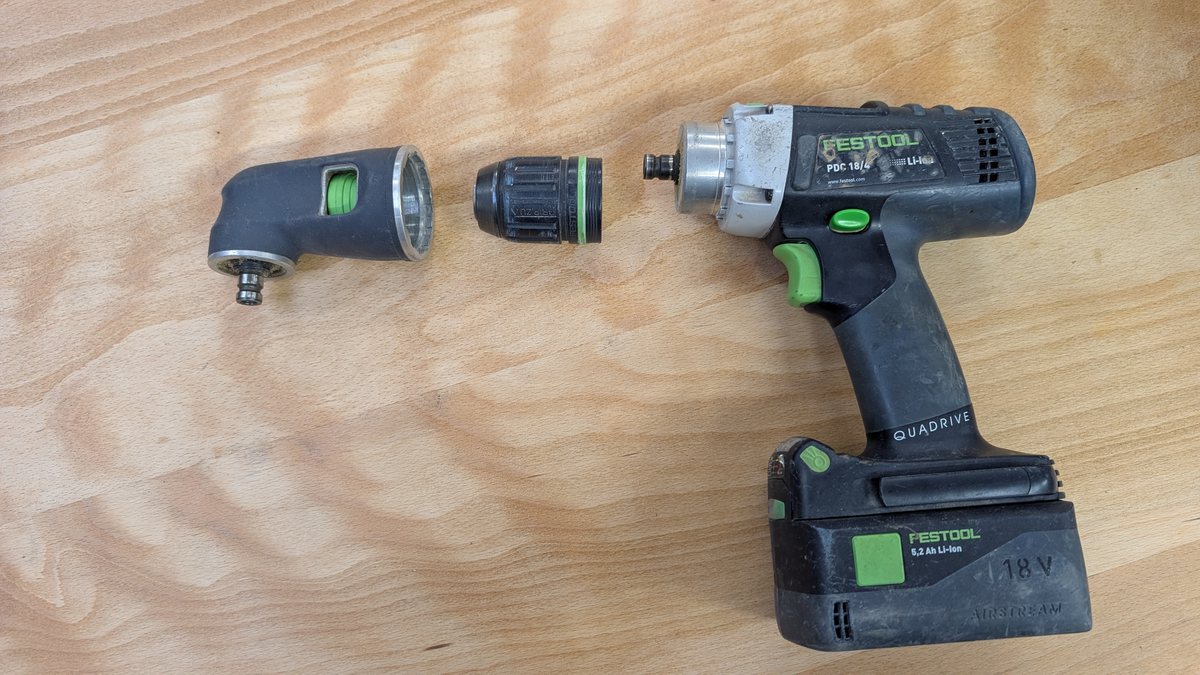
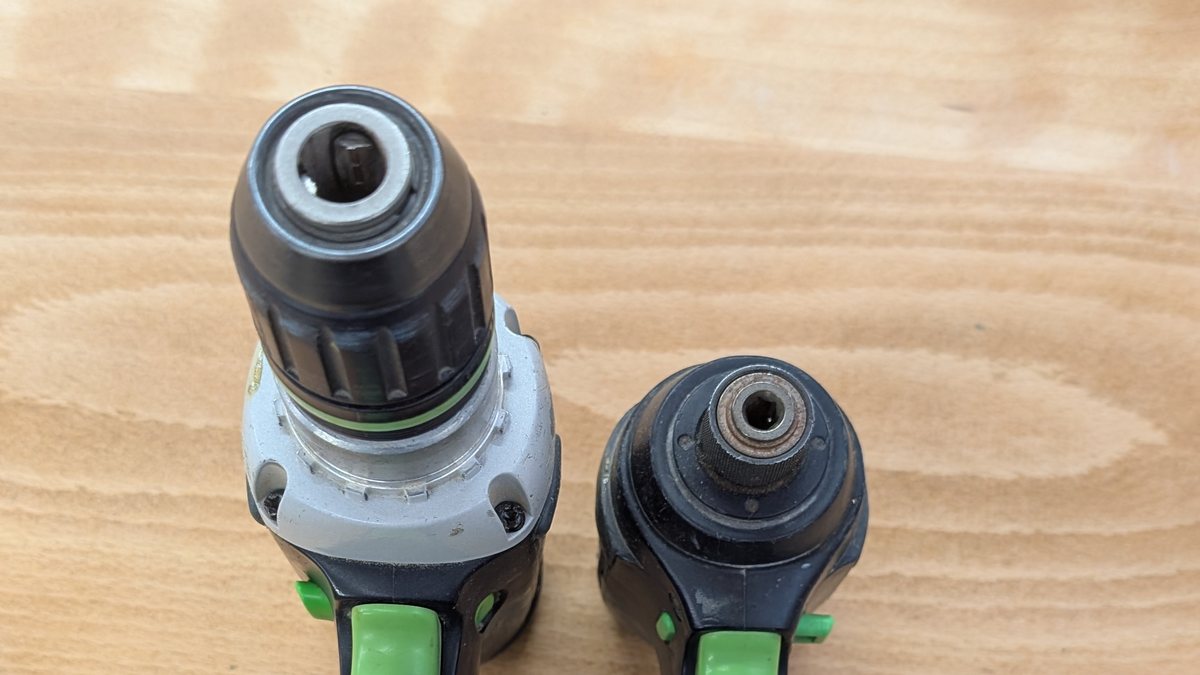
- Hold a round bit. An impact driver takes 1/4″ hex shanks only. A combi drill’s chuck, typically 1.5 to 13mm, takes any round drill bit, hole saw arbor, or wire brush.
- Drill a clean hole. Steady rotation is what you want for a hole. The middle of the combi range handles roughly 38mm in wood and 13mm in steel.
- Hammer into masonry. Every combi drill on the site has a hammer setting, typically good for around 13mm in brick or block. An impact driver has nothing for masonry at all.
- Stop before you over-drive. The clutch collar, usually around 20 settings, slips at a set torque. That is what stops a brass screw snapping or a screw head disappearing through plasterboard. An impact driver has no clutch, so control comes from your trigger finger.
So which do you buy first?
If you are buying one tool, buy the combi drill. It is the only one of the two that can do the whole job, badly in places, but it can do it. An impact driver cannot drill a hole, and you will need to drill a hole.
If you are driving fixings every day, the impact driver earns its place second, and quickly. Decking, studwork, floorboards, long screws into anything: that is where it stops being a nice-to-have.
The twin kit is usually the sensible way in, because the second tool costs much less bought in the kit than on its own later. Just know what the second one is for before it goes in the case.
| Combi drill | Impact driver | |
|---|---|---|
| Drills holes | Yes | No |
| Hammer for masonry | Yes | No |
| Bit it takes | Round or hex, chuck | 1/4″ hex only |
| Clutch | Yes, to stop over-driving | No |
| Long screws | Stalls, twists your wrist | What it is built for |
| Typical bare weight | About 1.3kg | About 1.0kg |
| Noise | Quieter | Loud when striking |
| Buy first? | Yes, if buying one | Second, and soon if you drive daily |
Figures are the middle of the range across the cordless tools listed on ToolPicker, taken from the makers’ own documentation. Compare any two side by side: combi drills, impact drivers, or put one of each into compare.
Can an impact driver drill holes?
Not properly. It only takes 1/4″ hex shanks, so you are limited to hex-shank drill bits, and the hammering action is wrong for a clean hole. For holes you want a drill.
Do I need both a combi drill and an impact driver?
If you drive fixings regularly, yes, and a twin kit is usually the cheaper way to get there. If you are buying one tool for jobs round the house, buy the combi drill: it is the only one that can do everything.
Why is an impact driver so much louder?
The noise is the mechanism. It drives by striking as it turns, thousands of times a minute, rather than applying steady twist.
Is an impact driver three times more powerful than a drill?
No, and the torque figures are not comparable. A drill’s figure is steady twist it can hold; an impact driver’s is a peak during a strike. The impact driver has far more in reserve for driving fixings, but that is not the same as being three times stronger.
Will an impact driver snap screws?
It can, because there is no clutch. Smaller or brass screws need a lighter trigger finger, or a drill with the clutch set.
Worth knowing about
New tools, site updates, fresh buying advice and the occasional deal worth having. Sign up and we'll send you the good stuff. No spam, just tools. Unsubscribe any time.
Suggested reads: Power Tool Torque Explained and Cordless Drills: A Beginner’s Guide, or browse all guides in the Advice Centre.