Every drill and impact driver shouts a torque figure: 90Nm, 158Nm, 205Nm. It is the number people buy on, and it is also one of the most misunderstood specs on the box. The uncomfortable truth is that two tools quoting the same torque can perform completely differently, and a higher number is not always the better tool.
Here is what power tool torque actually means, why you cannot compare it straight across brands, and how much you really need.
What torque actually is
Torque is turning force, how hard the tool can rotate against resistance, measured in newton-metres (Nm). The more torque, the bigger the fastener it can drive and the larger the bit it can turn before it stalls. Speed (RPM) is a separate thing: torque is the grunt, speed is how fast it spins. A good tool balances both through its gearbox.
Why you cannot compare torque across brands
This is the bit the marketing does not tell you: there is no single standard for how torque is measured, so brands quote it differently.
- Some quote “hard torque”, the figure from a sudden, hard joint like a bolt pulling up tight.
- Some quote a peak or stall figure that you would rarely see in normal use.
- Impact drivers are murkier still. They do not apply smooth rotation, they deliver rapid rotational hammer blows, and the Nm figure depends heavily on how the maker measured it. Impact-driver torque numbers are the least comparable of all.
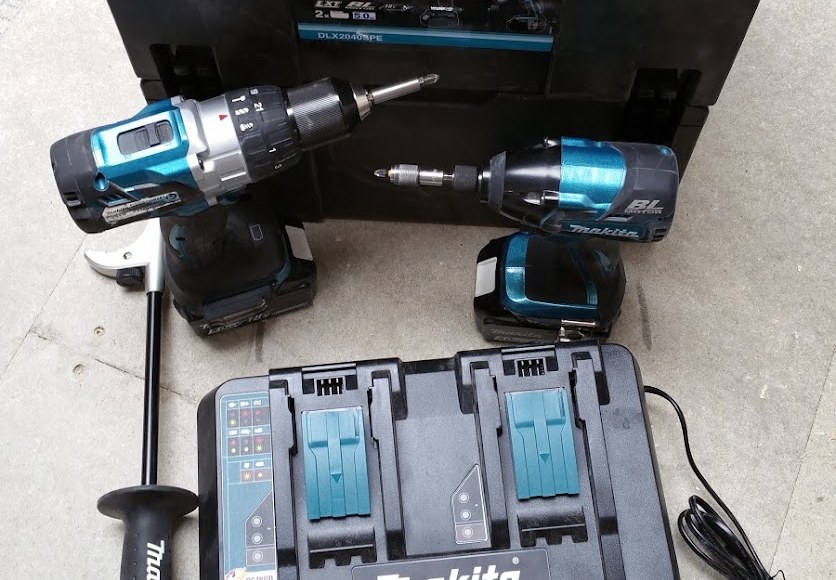
Some makers also publish a “soft torque” figure, measured on a joint that gives a little, like a screw going into timber. It is always lower, and it is closer to what you feel on most jobs. Makita’s DHP490 combi drill shows how far apart the numbers can be: it is sold as a 65Nm drill, and Makita’s own page also lists 50Nm hard and 27Nm soft. Same drill, three different figures. See the DHP490 kit at Toolstation (we may earn a commission)
So a 169Nm drill from one brand and a 158Nm drill from another are not a clean 11Nm apart in the real world; they may have been measured on different joints entirely. We treat each maker’s stated max as a guide, flag the measurement quirk, and tell you when more torque genuinely helps versus when it is just a bigger number.
How much torque do you actually need?
For a cordless combi drill, as rough guidance:
- 40–50Nm: light DIY, flat-pack, small fixings.
- 60–90Nm: general trade work. This band handles the large majority of day-to-day drilling and driving.
- 100Nm and up: heavy work. Large auger bits, big hole saws, coach screws and lag bolts.
Most trades are well served in the 60–90Nm range. Chasing the very top of the chart buys you headroom for occasional heavy jobs, but it usually comes with more weight and a higher price, so it is only worth it if you genuinely do that work.
For impact drivers, think less about the Nm figure and more about whether it drives the fasteners you use, quickly and without cam-out. The mechanism does the work; the headline number is a poor guide.
The bottom line
Torque tells you roughly how much turning grunt a tool has, but because brands measure it differently, it is a guide, not a league table, and it is only one of several things (speed, gearing, weight, control) that decide how a tool actually feels. Buy enough torque for the work you really do, and do not pay a weight-and-money premium for a number you will never call on.
Is more torque always better?
No. Beyond what your work needs, extra torque usually means extra weight and cost. Match it to the job; most trade drilling sits comfortably in the 60 to 90Nm range.
Why do two drills with the same Nm feel so different?
Because the figure may have been measured differently, and because the gearbox, motor and speeds all affect how that torque is delivered. The number alone does not tell the whole story.
Can I compare a combi drill’s torque to an impact driver’s?
No. They produce force in completely different ways: a drill rotates steadily, an impact driver delivers rotational blows. Their Nm figures are not comparable.
What torque do I need for big holes or coach screws?
For large auger bits, big hole saws and coach or lag screws, look at 100Nm and up. For everyday drilling and driving, 60 to 90Nm is plenty.
Worth knowing about
New tools, site updates, fresh buying advice and the occasional deal worth having. Sign up and we'll send you the good stuff. No spam, just tools. Unsubscribe any time.
Suggested reads: Which Cordless Battery Platform Should You Buy Into?, or browse all guides in the Advice Centre.