Every battery gives an “Ah” number: 2.0Ah, 5.0Ah, 8.0Ah. People treat it like a power rating, buy the biggest one they can, and end up carrying a heavy pack they did not need. Ah is worth understanding, but on its own it does not tell you what most people think it does, and it is useless for comparing batteries across different voltages.
Here is what Ah actually measures, the number that matters more (Wh), and how much you really need.
Ah is runtime, not power
Ah stands for amp-hours, and it measures capacity: how much charge the battery holds, which translates to run-time. A 5.0Ah pack runs roughly twice as long as a 2.5Ah pack of the same voltage before it needs charging. That is all it tells you.
It does not make the tool more powerful. Power comes from the tool and how hard the battery can push current, not from the Ah figure. A bigger Ah number buys you time between charges, not more grunt. (Very large packs do hold high output better under heavy load, but that is a side effect of more cells, not the Ah rating itself.)
Wh is the real size of the tank
Here is the number the brands do not put on the front of the box, and it is the one that actually lets you compare batteries: watt-hours (Wh). Wh is the total energy the pack holds, and it is simply voltage multiplied by Ah.
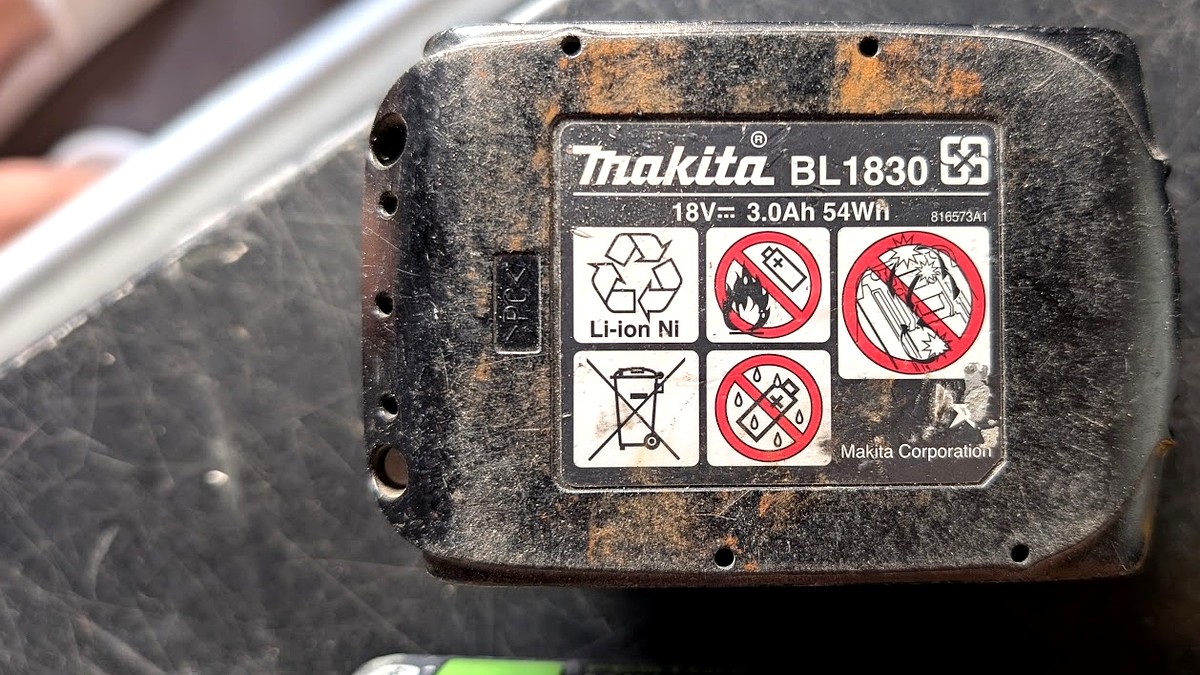
That matters because Ah alone is meaningless across different voltages. Watch what happens when you convert to Wh:
| Pack | Voltage | Ah | Wh (energy) | Weight |
|---|---|---|---|---|
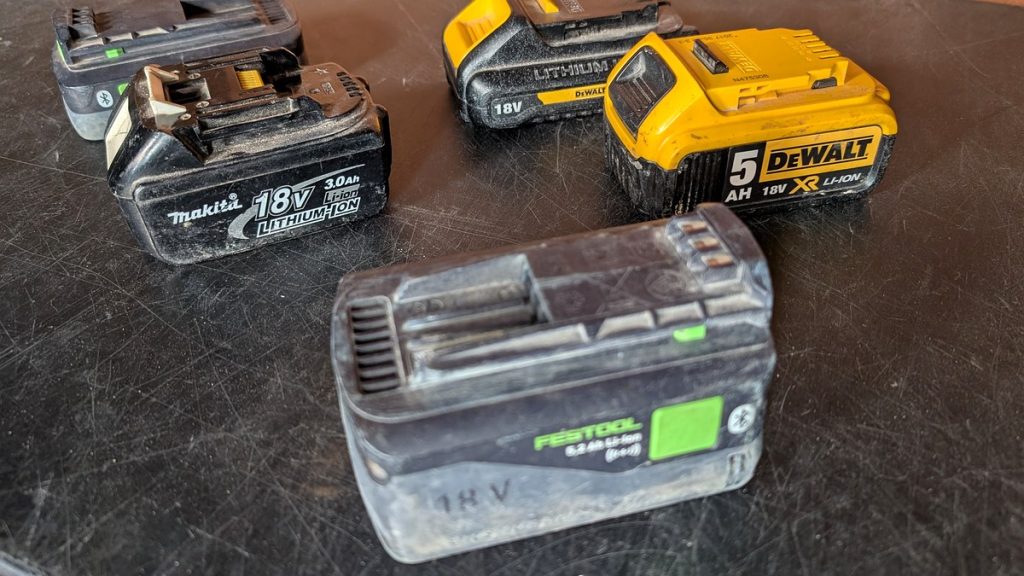
| DeWalt DCB184 (XR) | 18V | 5.0Ah | 90Wh | 0.62kg |
| Makita BL4025 (XGT) | 40V max (36V nom) | 2.5Ah | 90Wh | 0.71kg |
| Makita BL4050F (XGT) | 40V max (36V nom) | 5.0Ah | 180Wh | 1.30kg |
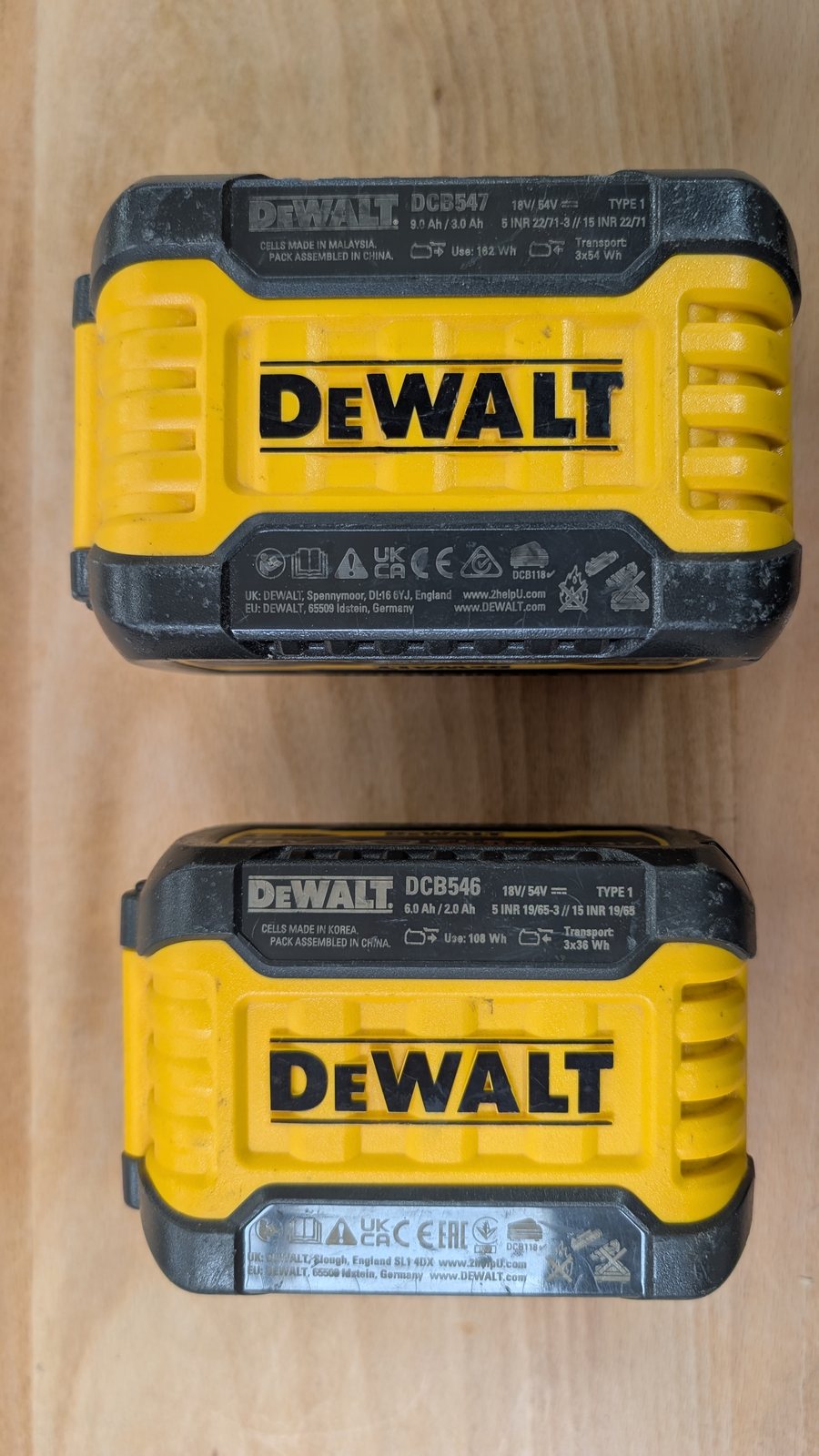
| DeWalt DCB546 (FlexVolt) | 18V/54V | 6.0/2.0Ah | 108Wh | 1.05kg |
One thing to square before you check that maths. Makita’s XGT packs are sold as “40V max”, but 40V is the peak reading off a freshly charged pack, not the voltage it actually runs at. The working figure, and the one the watt-hours are calculated on, is 36V. That is why a 2.5Ah XGT pack is 90Wh and not 100Wh. DeWalt play the same card in the States, where an 18V pack is badged “20V MAX”. So when you do the sum yourself, use the nominal voltage, not the number on the front of the box.
Look at the first two rows. A 40V max XGT pack at 2.5Ah and an 18V 5.0Ah pack hold the exact same energy: 90Wh. So a battery labelled “2.5Ah” can carry just as much charge as one labelled “5.0Ah”, purely because it runs at a higher voltage. If you compared them on Ah alone, you would pick the wrong one. Compare them on Wh and the truth is obvious.
And the third row shows the flip side: a 40V max XGT pack at 5.0Ah holds 180Wh, double the 18V 5.0Ah, because it is the same Ah at double the nominal voltage. Same “5.0Ah” label, twice the energy.
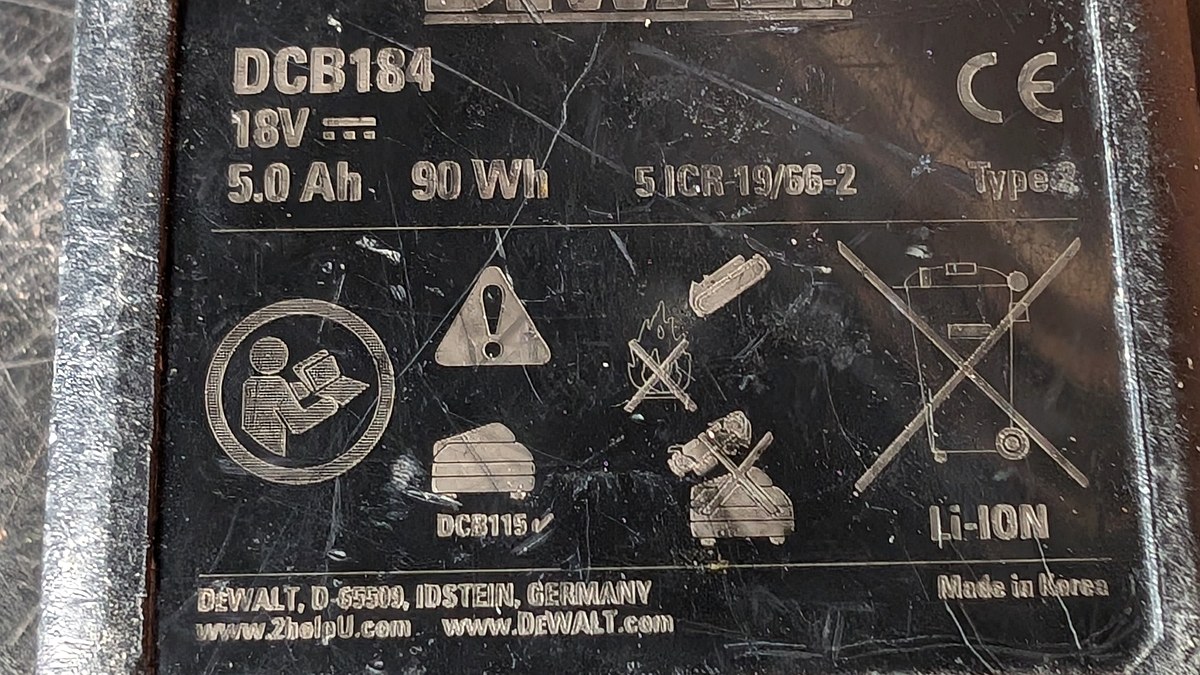
So the rule is simple: to compare two batteries fairly, use Wh, not Ah. If a maker only quotes Ah, work out the Wh yourself (volts times Ah) before you judge one pack against another.
Why FlexVolt shows two Ah numbers
This trips everyone up. A DeWalt FlexVolt pack is labelled something like “6.0Ah / 2.0Ah”, and people assume it is faulty or a marketing trick. It is neither. FlexVolt packs switch voltage depending on the tool: they run as 18V or as 54V. The energy is fixed (108Wh in that example), but the Ah figure changes with the voltage. At 18V it is a 6.0Ah pack (18 times 6 is 108). Drop it into a 54V tool and the same energy reads as 2.0Ah (54 times 2 is 108). Two labels, one tank.
Bigger Ah means more weight, and more cells
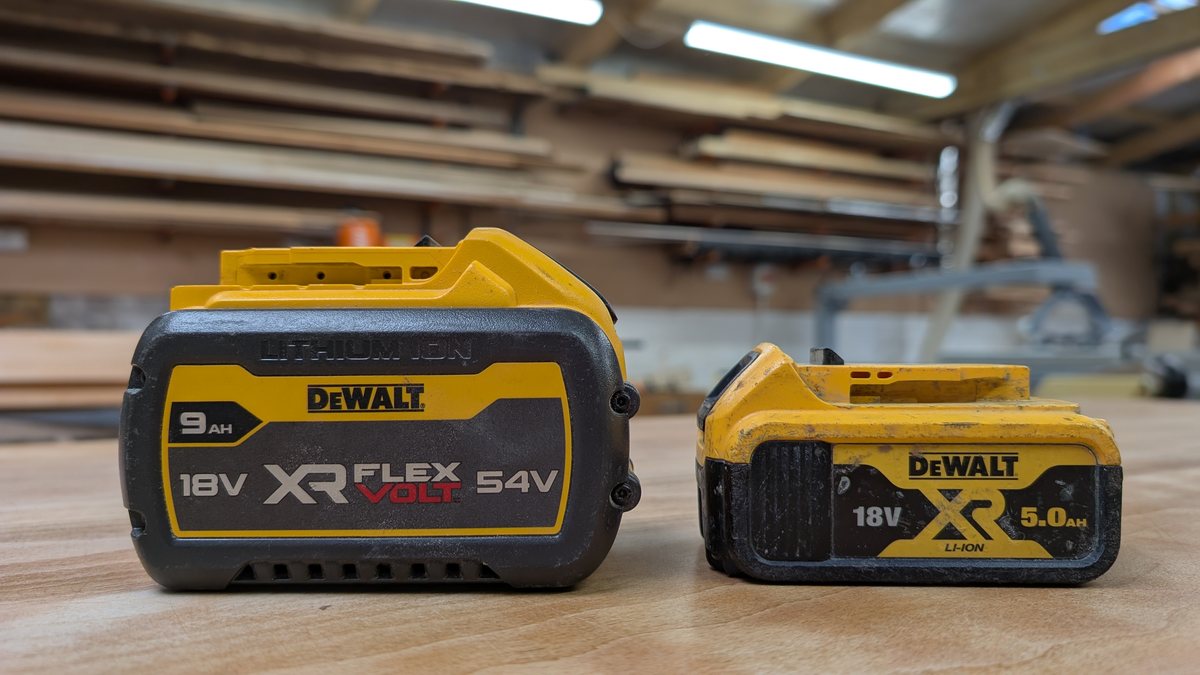
Capacity is stored in cells, so more Ah means more cells, which means more weight. It is worth knowing roughly how that scales, because a big pack on the end of a tool all day is real fatigue:
- A small 5-cell pack (around 1.5Ah, or a compact POWERSTACK) weighs about 0.3kg.
- A standard 10-cell 5.0Ah 18V pack is about 0.6kg.
- A 15-cell FlexVolt pack runs from roughly 1.0kg up to 2.1kg for the 15.0Ah.
- A 20-cell 40V max 8.0Ah XGT pack is around 1.9kg.
So the jump from a 5.0Ah to a big high-capacity pack is not just more money, it is a noticeably heavier tool. For overhead and all-day handheld work, a lighter pack often wins even though it needs charging more often.
The “compact” battery that is not compact
One worth knowing if you buy DeWalt. The POWERSTACK name suggests small and light, and in the small sizes it genuinely is: the 1.7Ah POWERSTACK is a tiny 0.31kg with strong output, ideal for keeping a driver light. But the 5.0Ah POWERSTACK weighs 0.747kg, which is actually heavier than the standard 5.0Ah XR pack at 0.62kg. POWERSTACK earns its keep in the compact sizes, not the big ones, so do not pay the premium for a large POWERSTACK expecting it to be lighter. It is not.
How much do you actually need?
- 1.5 to 2.0Ah: light, cheap, great for drivers and all-day handheld work where weight matters more than run-time.
- 4.0 to 5.0Ah: the sensible all-rounder for most trades. Enough run-time for a day’s drilling and driving without much weight penalty.
- 6.0Ah and up (or FlexVolt / high-output): for high-draw tools (saws, grinders, breakers) and long runs between charges. Heavier and dearer, so buy it for the tools that need it, not by default.
The bottom line
Ah is run-time, not power, and it only compares fairly within one voltage. Wh (volts times Ah) is the true measure of what a battery holds, and it is the number to use when you weigh one pack against another. Buy enough capacity for your work and your tools, not the biggest number on the shelf, because past a point all you are buying is weight.
Does a higher Ah battery make my tool more powerful?
No. Ah is capacity, so it buys run-time, not power. The tool and how hard the pack can push current decide power, not the Ah figure.
What is the difference between Ah and Wh?
Ah (amp-hours) is capacity at a given voltage. Wh (watt-hours) is total energy: voltage times Ah. Wh is the only fair way to compare batteries of different voltages.
Can I compare a 40V battery with an 18V one?
Only by Wh, not Ah, and use the nominal voltage when you work it out. A 40V max XGT pack at 2.5Ah and an 18V 5.0Ah pack both hold 90Wh, so they carry the same energy despite the different Ah labels.
Where do I find the Wh figure on my battery?
It is usually printed in small text on the back or the top moulding, next to the cell code, rather than on the front. If it is not there, multiply the voltage by the Ah yourself.
Is a Makita 40V max battery really 40V?
Not in use. 40V is the peak off a full charge; the nominal voltage it works at is 36V, which is what the watt-hour rating is based on. A 2.5Ah XGT pack is 90Wh, so 36 times 2.5, not 100Wh. DeWalt’s US “20V MAX” badge is the same thing on an 18V pack.
Why does my FlexVolt battery show two Ah numbers?
FlexVolt packs run at 18V or 54V. The energy is fixed, but the Ah changes with voltage: a 108Wh pack reads 6.0Ah at 18V and 2.0Ah at 54V. Same battery, two labels.
Is a bigger battery always better?
No. More Ah means more cells, more weight and more cost. It is worth it for high-draw tools and long run-time, but for light all-day work a smaller pack is often the better buy.
Worth knowing about
New tools, site updates, fresh buying advice and the occasional deal worth having. Sign up and we'll send you the good stuff. No spam, just tools. Unsubscribe any time.
Suggested reads: Which Cordless Battery Platform Should You Buy Into? and Brushless vs Brushed, or browse all guides in the Advice Centre.