A spare battery is the most common thing anyone buys after the tool itself, and it is the easiest one to get wrong. The badge on the pack tells you the brand and the voltage, and most people reasonably assume that is the whole story. It isn’t. Here is what to check before you spend.
1. Will it physically fit the tool?
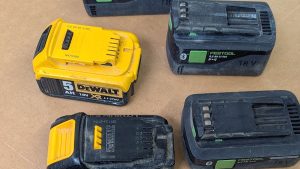
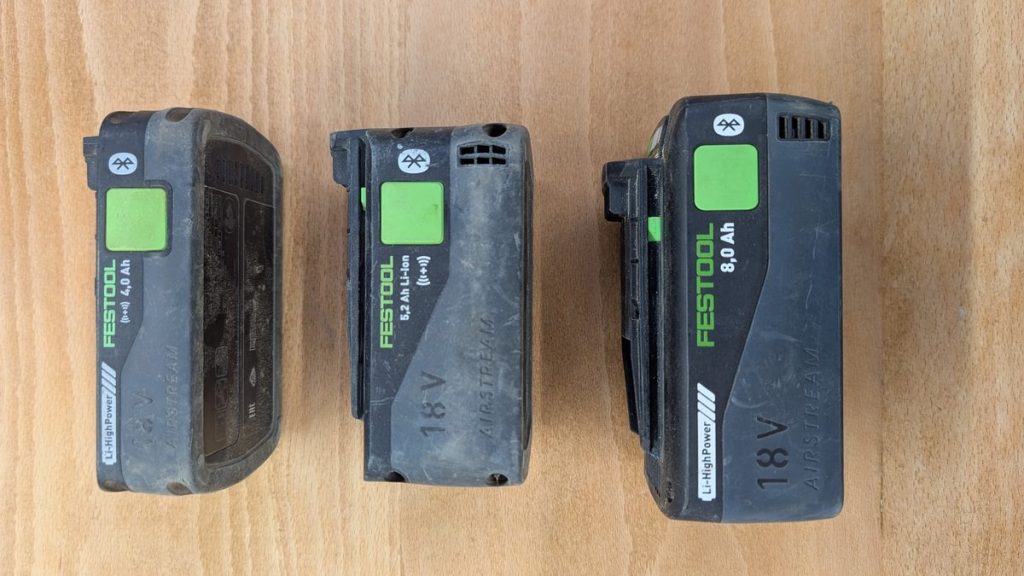
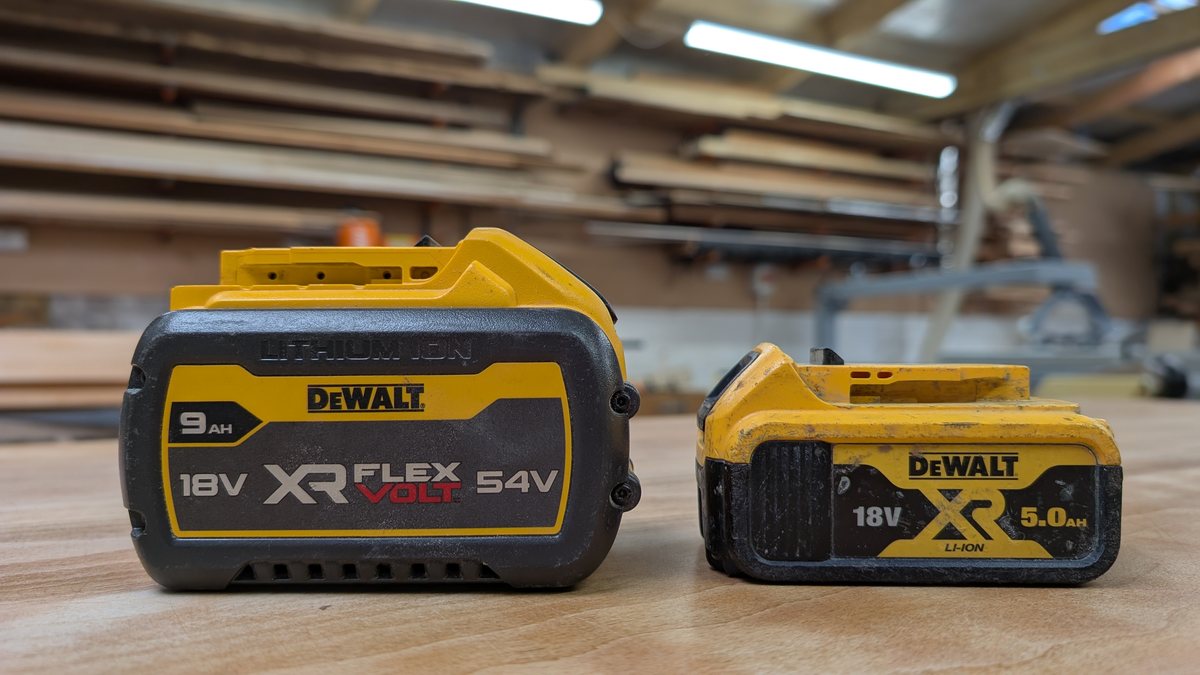
This is the one that catches people out, because “same platform” sounds like a guarantee. A bigger capacity means more cells, and more cells means a bigger pack.
Makita’s 18V range shows it clearly. The 5.0Ah BL1850B is 113mm long. The 9.0Ah BL1890 is 136mm and 0.97kg, and the 12.0Ah BL18120 is 156mm and 1.3kg. They get taller and deeper too, so by the time you reach the 12.0Ah you are holding a noticeably bigger block.
That has consequences. On both the 9.0Ah and the 12.0Ah pages, Makita UK names five tools the pack will not fit: the DSP600 and DSP601 plunge saws, the DSS611 circular saw, and the DRC200 and DRC300 robot vacuums. The note is not on the 6.0Ah and below, so this is a problem you buy your way into rather than one that was always there.
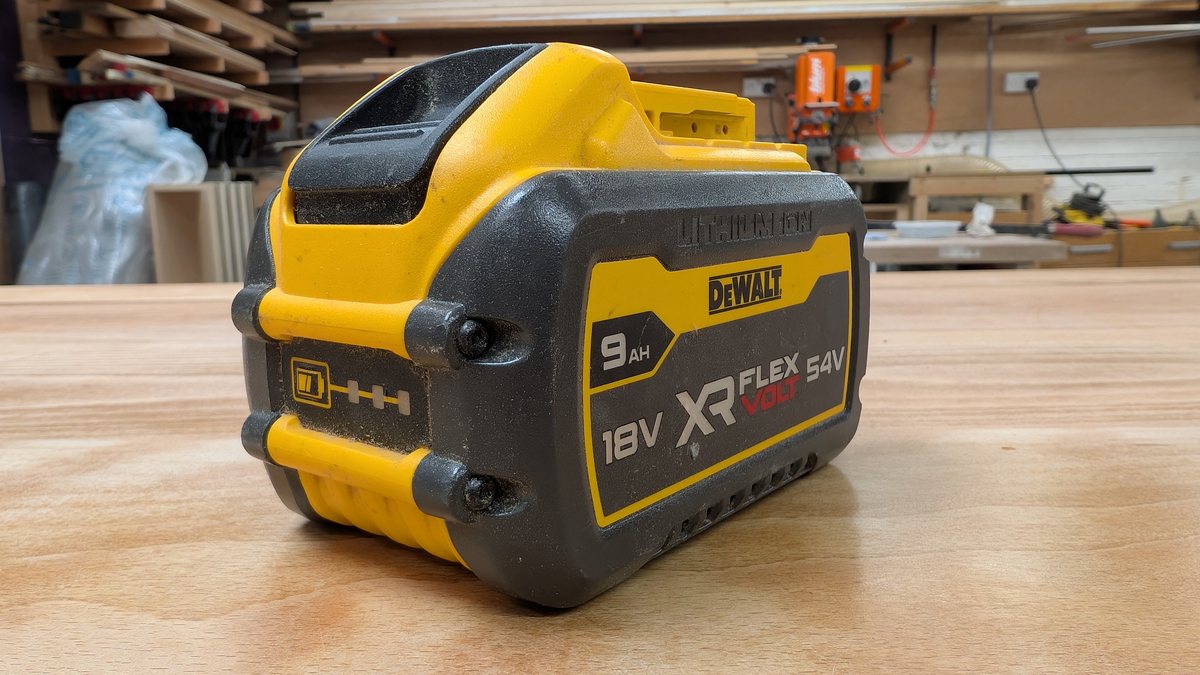
DeWalt’s FlexVolt packs grow the same way. A 6.0Ah weighs 1.08kg. A 15.0Ah weighs 2.12kg, near enough double.
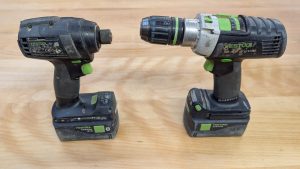
And even where a big pack fits, it changes how the tool handles. A heavy pack on a one-handed tool you hold overhead is a different machine by the afternoon.
Check the pack against the tool, not just against the platform badge. Every battery page on the site lists the tools a pack does not fit where the manufacturer publishes them.
2. Is it even the same system?
Two brands run more than one 18V system, and the packs do not cross over.
- Bosch blue and Bosch green. Professional (blue: the standard 18V packs, ProCORE18V and EXPERT) and Home & Garden (green: POWER FOR ALL, PBA) are separate 18V systems with different connectors. A blue pack will not fit a green tool, and a green one will not fit a blue tool.
- Makita LXT and XGT. 18V LXT and 40V XGT are different ranges. Makita’s ADP10 adapter (191C10-7) is often taken as the bridge between them, but it is a charging adapter: it lets an XGT charger charge 14.4V and 18V LXT packs, with the BL1430A excepted. It does not let either battery run the other’s tools.
That second one is an easy one to get the wrong way round, and plenty of listings do.
3. Does that capacity actually exist?
Makita UK’s current 18V LXT list runs 2.0Ah, 3.0Ah, 4.0Ah, 5.0Ah and 6.0Ah, then jumps to 9.0Ah (BL1890) and 12.0Ah (BL18120). The 1.5Ah BL1815N has dropped off it. There is no 8.0Ah anywhere in it. Makita’s 8.0Ah packs, the BL4080F and BL4080H, are 40V XGT, and they do not fit an 18V tool.
So a listing offering an “8.0Ah Makita 18V” battery is telling you something, and it isn’t that you have found a bargain. The same test works for any brand: find the pack on the maker’s own site before you buy, not just on the listing. If the manufacturer does not make it, somebody else did.
4. Is it a genuine pack?
Batteries are the most counterfeited thing in the cordless world, because the pack is where the money is and a convincing copy only has to look right from across a van.
It is worth separating two different things. A reputable third-party pack is openly not the maker’s and says so on the label. A counterfeit pretends to be the maker’s. The second is the safety problem; both sit outside the maker’s warranty.
Makita publishes its own warning on this, and it is blunter than most marketing. A modern pack is not a box of cells: it talks to the charger and the tool, and Makita’s position is that a non-genuine pack can defeat that communication. The risks it names are the battery bursting, fire damage to the tool, the battery or the charger, and unknown tool performance.
The part people miss is the warranty. Makita says fitting one voids the cover on the tool and the charger, not just on the pack. So a cheap spare is not a £30 gamble on a battery. It is a £30 gamble on the tool it goes into.
What to look for before you buy:
- A capacity the manufacturer doesn’t make. Section 3 above. This is the single clearest tell, and it costs nothing to check.
- The words in the listing title. “Compatible with”, “replacement for”, “fits Makita” and similar mean it is not the manufacturer’s pack. That is not dishonest in itself, but it is not the thing you thought you were buying.
- A price well under every real retailer. Batteries do get discounted, but not by half across the board. If one seller is miles below the rest for the same model code, that is the question to ask.
- Who you are buying from. A manufacturer-approved dealer is the simple answer. Marketplace listings where the seller is not the retailer are where most of the trouble lives.
- The pack itself, once it arrives. Makita’s own description of a genuine pack is that it is black, carries the Makita trademark with Lithium-Ion identification on both sides, and the logo on the base. Other makers publish similar notes. A pack that fails its own maker’s description should go straight back.
None of this is an argument for only ever buying the most expensive pack on the shelf. It is an argument for knowing which of the three things you are buying: the manufacturer’s pack, an honest third-party pack, or a fake.
5. The bigger pack is often the better buy
People default to the smaller pack to save weight. Within a range, that is often a false economy, because the step up frequently costs almost nothing in weight.
DeWalt’s DCB182 is 4.0Ah and 72Wh at 0.61kg. The DCB184 is 5.0Ah and 90Wh at 0.62kg. That is 25% more energy for ten grams. If you are weighing those two against each other, weight is not the reason to pick the smaller one.
Watt-hours, not amp-hours, are what tell you how much energy a pack actually holds, and they are the only fair way to compare across voltages. Our guide to Ah and Wh explains why, and the battery compare page puts any two packs side by side on weight, capacity and energy.
6. Check what the warranty covers
Tool warranties and battery warranties are not the same thing, and the headline figure usually belongs to the tool.
DeWalt’s 3-year guarantee needs the product registered within 4 weeks of purchase, and its exclusions list reads “Batteries (excluding POWERSTACK) and Chargers”. So a standard XR pack stays on 1 year, while a POWERSTACK pack can get 3. POWERSHIFT batteries and chargers are a separate case again, extendable to 2 years rather than 3.
Two details that catch people out on the registration itself. A kit is not registered as a kit: each tool in it goes in separately. And a repair or replacement does not restart the clock, so the cover still runs from the original purchase date.
Every brand does this differently, and the registration windows are short. The cover for each brand is on its brand page, with a link to the manufacturer’s own registration page.
7. The small things worth checking
- A charge indicator is not a given. Makita’s current 18V LXT packs all end in B (BL1820B through BL1860B) and Makita UK lists a charge level indicator on each. For the older non-B packs like the BL1830 and BL1815N, Makita does not publish it, so if you are buying one secondhand, do not assume a gauge.
- With HiKOKI it depends on the model. The 18V M packs (BSL1820M, BSL1840M) and the BSL1850MA have an indicator. HiKOKI’s UK catalogue lists the C compacts (BSL1830C, BSL1850C) without one. Check the exact model code if a gauge matters to you.
Worth knowing, brand by brand
Two brands have more going on inside their 18V range than the badge suggests.
- Bosch Professional runs three 18V lines, and all three fit Bosch Professional tools. The standard 18V packs are 2.0Ah, 4.0Ah and 5.0Ah on Bosch UK’s current list; Bosch’s Cool Pack heat layer is included from 4.0Ah upward, so the smallest pack does without it. ProCORE18V run 4.0Ah, 5.5Ah, 8.0Ah and 12.0Ah, and the ProCORE18V+ 8.0Ah uses tabless cells. The EXPERT packs are the third line, and in the UK there are two of them, the EXBA18V-40 at 4.0Ah and the EXBA18V-55 at 5.5Ah, sold through qualified dealers rather than on the shelf. Twelve amp-hours is the ceiling on 18V here: the larger EXPERT packs you will see written about are a North American range, not a UK one. For BITURBO tools, Bosch recommends a ProCORE pack of 5.5Ah or more.
- HiKOKI MultiVolt packs switch voltage themselves, so one battery runs HiKOKI’s 36V tools and its 18V tools, with some older 18V tools excepted. The BSL36A18 is 36V 2.5Ah / 18V 5.0Ah (90Wh) and the BSL36B18 is 36V 4.0Ah / 18V 8.0Ah (144Wh). The BSL36A18 is the same 116 × 76 × 69mm as HiKOKI’s 18V BSL1850MA and 50g heavier, at 0.70kg against 0.65kg. HiKOKI UK now lists these as the X versions, BSL36A18X and BSL36B18X.
The bottom line
Find the pack on the maker’s own site, check it fits the tool you actually own, check the range as well as the voltage, and look at watt-hours rather than amp-hours when you are choosing between sizes. Check whether the warranty covers batteries at all, because on several brands it does not. And if the capacity on the listing is one the maker does not make, walk away: that pack is not what it says it is, and the maker’s cover on your tool goes with it.
Every pack we list sits on its own page with its capacity, energy, weight and the tools it will not fit, next to what the retailers we track are charging for it. Start from your platform and work down to the pack.
Is a bigger Ah battery always better?
No. A bigger capacity means a physically bigger, heavier pack, and some makers list tools their largest packs will not fit. Within one range the step up is often almost free in weight, so it is worth checking the figures rather than assuming either way.
Will any battery of the same voltage fit my tool?
No. Voltage is not the same as platform. Bosch runs separate blue and green 18V systems with different connectors, and a pack from one will not fit a tool from the other. Even within one platform, the largest packs do not fit every tool.
Does a Makita 18V battery fit a Makita 40V XGT tool?
No. LXT and XGT are different ranges. The ADP10 adapter lets an XGT charger charge LXT batteries, but it does not let either battery run the other’s tools.
How do I tell a fake battery from a real one?
Start with the capacity: if the maker does not make that size, the pack is not the maker’s. Then check the listing wording, because “compatible with” or “replacement for” means it is a third-party pack, and check the price against other retailers for the same model code. Makita’s own guidance is that a genuine pack is black with the Makita trademark and Lithium-Ion identification on both sides and the logo on the base.
Does a non-genuine battery really affect my tool’s warranty?
Makita says it voids the cover on the tool and the charger, not just the battery, and names bursting, fire damage and unknown performance among the risks. Other makers take a similar line. It is worth reading the brand’s own terms before fitting a pack that is not theirs.
Is my spare battery covered by the tool’s warranty?
Often not. DeWalt’s 3-year guarantee, for example, needs registration within 4 weeks and excludes batteries and chargers, with POWERSTACK packs the exception. Check the brand’s own terms before you assume the pack is covered.
How do I compare two batteries fairly?
Use watt-hours rather than amp-hours, because amp-hours only compare like for like at the same voltage. Weight and physical size matter just as much once the pack is on the tool all day.
Worth knowing about
New tools, site updates, fresh buying advice and the occasional deal worth having. Sign up and we'll send you the good stuff. No spam, just tools. Unsubscribe any time.
Suggested reads: Power Tool Battery Ah and Wh Explained and Which Cordless Battery Platform Should You Buy Into?, or browse all guides in the Advice Centre.